SEPTIC SERVICES · APRIL 20, 2026 · 4 MIN READ
TANK SIZE, FREQUENCY & COST: RESIDENTIAL VS. COMMERCIAL SEPTIC SERVICES

Your septic system is working every single day, and the moment it stops, everything stops with it. Most property owners only call when it's already too late — usually because they assumed their system worked like everyone else's.
Residential and commercial septic systems are built for very different demands, and treating them the same is how problems start.
Tank size
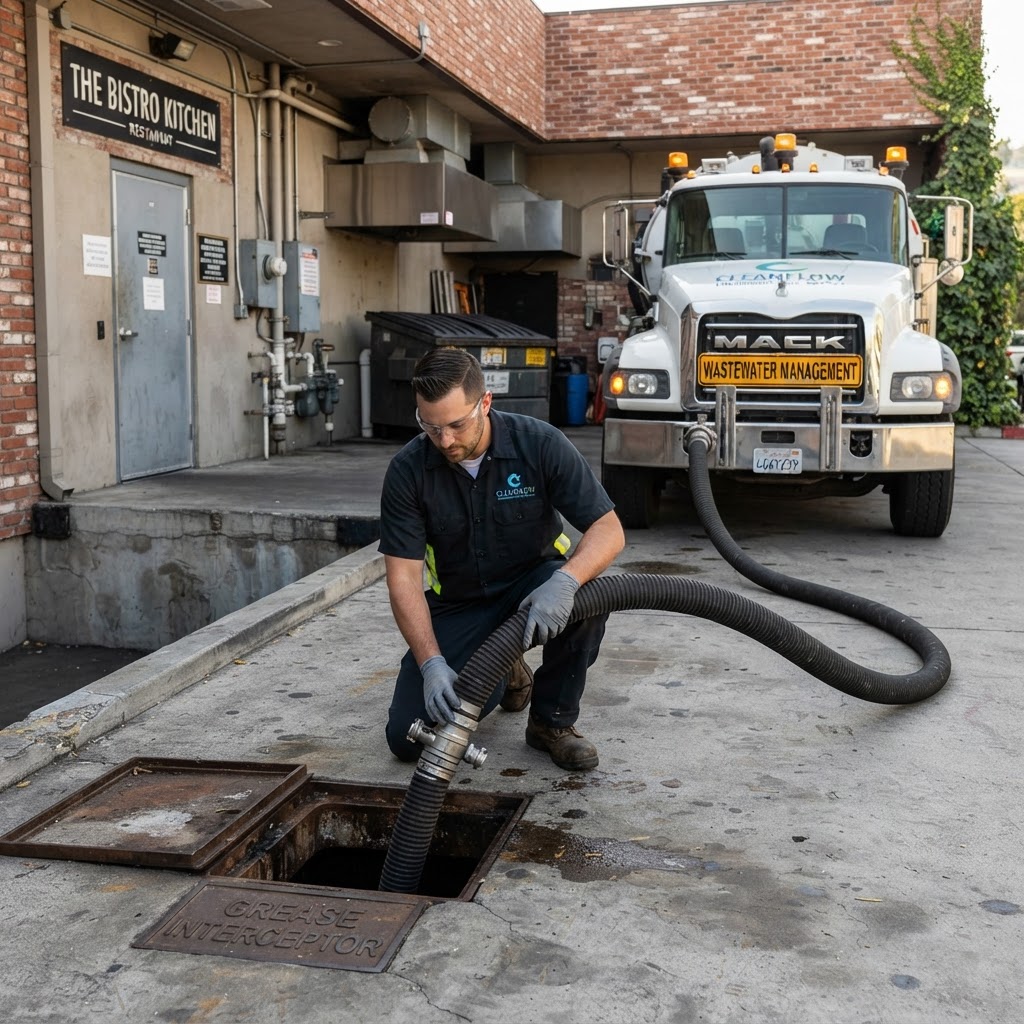
Most homes run a tank between 1,000 and 1,500 gallons, sized to the number of bedrooms. Commercial systems are sized to peak demand instead — a restaurant, campground, shop or event venue may need several thousand gallons, plus grease interception on the kitchen side.
Bigger doesn't mean lower maintenance. A commercial tank handles more volume, but it also fills faster relative to its size because usage is concentrated and continuous.
Service frequency
- Single-family home: every 3–5 years
- Large household or heavy water use: every 2–3 years
- Small business or office: every 1–2 years
- Restaurant or food service: quarterly or more
- Campground, venue or seasonal site: based on peak season use
The pattern is simple: the more concentrated the daily usage, the shorter the interval.
Cost
Residential pumping is generally a predictable, one-line expense. Commercial service costs more per visit — larger tanks, more waste volume, sometimes after-hours scheduling — but it's still dramatically cheaper than the alternative. An unexpected failure at a business means closed doors, lost revenue and emergency rates all on the same day.
The useful way to think about it: residential pumping protects your property, commercial pumping protects your revenue.
What commercial properties need that homes don't
- Grease trap service on any kitchen, on its own schedule
- Documentation for health and environmental inspections
- Flexible scheduling so service doesn't interrupt business hours
- Higher-capacity equipment for larger tanks and heavier volume
Getting the interval right
Whether it's a house or a business, the goal is the same — pump before the tank forces the issue, not after. Keep records of each visit, note what the technician found, and adjust your schedule based on real data rather than guesswork.
MVP Rentals handles both residential and commercial septic service across Eastern Idaho. Tell us about your property and we'll recommend a schedule that fits it.